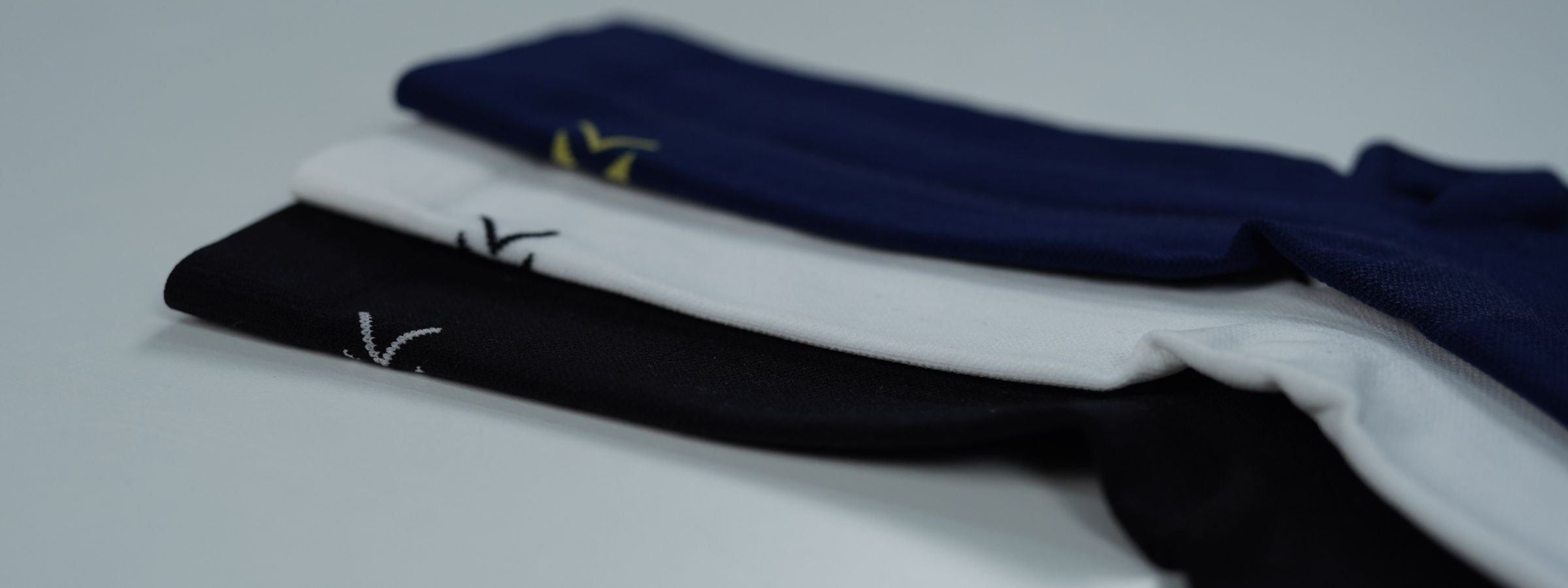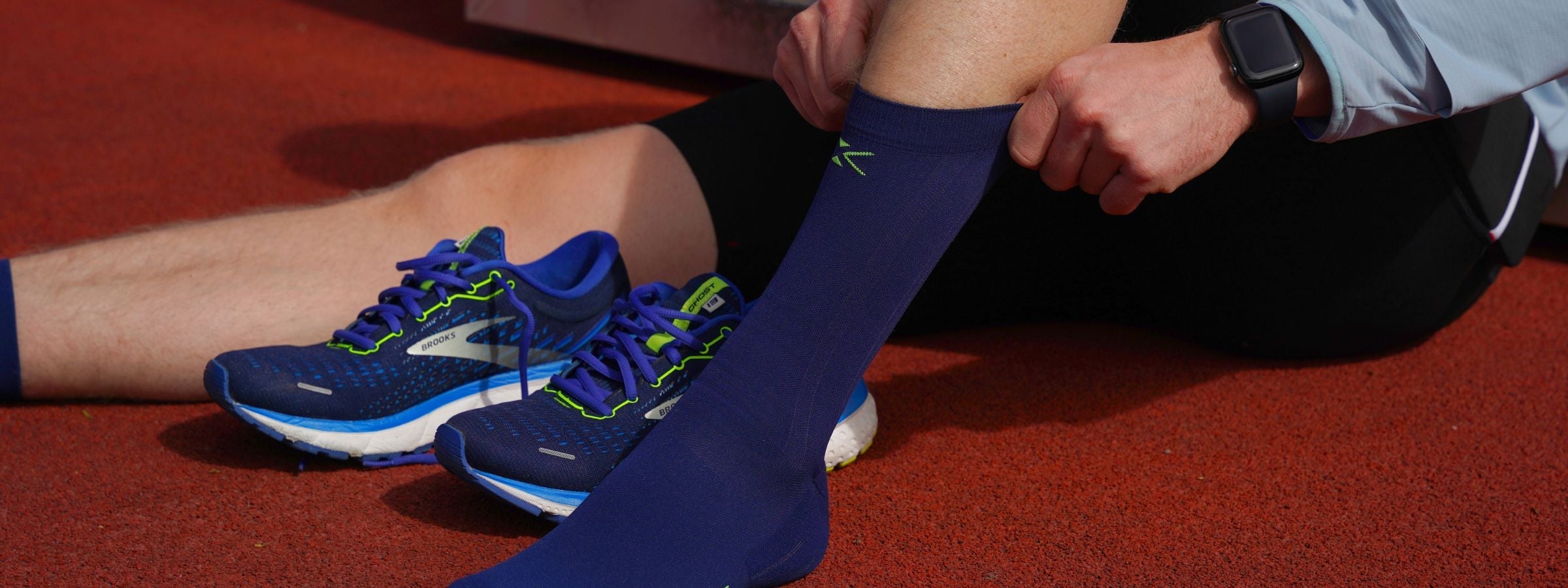


How long do compression socks last and when do you replace them?
After several months, a compression sock often still looks fine, but does it still do what it's supposed to? The lifespan of compression lies in the pressure, not in the color. In this article, you'll learn how long compression socks last, what factors influence this, and what signs indicate it's time for a new pair.
No magic number of months
KINEX deliberately doesn't put a fixed number on it: “The lifespan depends on how often you wear the socks, how you wash them, your method of putting them on, and how much friction they endure. That's why we prefer not to put a magic number of months on it that would be the same for everyone.” That's fair, because it's true: a sock you wear three times a week and wash carefully will last longer than a pair that goes through a hot wash daily.
What the research shows
For medical stockings, there is guidance. Veraart and colleagues (1997, Vasa) followed 99 knee-high stockings in daily use and observed a gradual decrease in pressure over three months, from an average of 29.3 to 26.5 mmHg for class II. Based on this, the common replacement recommendation for medical compression is three to six months. For sports compression, it depends more on how often you wear and maintain them, but the core lesson is the same: pressure gradually decreases with use, even if the sock still looks good.
What the construction contributes
Here the construction of the sock comes into play. KINEX: “Our socks are fine-knitted on machines with 200 needles. This allows for a dense, refined construction. Such a construction can contribute to comfort, fit, and durability, but even a high-quality sock remains a consumable item.” That is precisely the right nuance: a fine, dense knit construction is a quality characteristic, but not a promise of eternal life. We don't claim that more needles automatically last for years, because it's not that simple.
Signs to replace
The wearing sensation is your best gauge. KINEX: “If you notice that the sock becomes noticeably looser, slides down, remains stretched out, or no longer provides the same support, then it's time for replacement. You wouldn't keep running in worn-out running shoes just because the color is still nice.” So, pay attention to a sock that is noticeably easier to put on, slips down or twists, shows thin spots or broken threads, or doesn't regain its shape after washing.
Rotating extends the calendar life
If you alternate between multiple pairs, each pair will undergo fewer wears and washes, making it last longer in terms of months. This does not extend the total number of hours of use, but it does extend how long a specific pair stays fresh. Therefore, keep an eye on the wear and tear per pair, not just the purchase date. You can read how many pairs are practical in two pairs or one.
The conclusion
Don't just look at the calendar, but at three things simultaneously: how often and how long you've used the sock, its physical condition, and the retention of fit and pressure. If the sock feels loose, slides down, or no longer provides the same support, then it's no longer doing its job. Good maintenance extends that period; you can read how to do that in how to wash and maintain compression socks.
Perseverance wins.
Sources
Veraart et al. (1997), Vasa · Macintyre et al. (2016), International Journal of Nursing Studies · Siddique et al. (2023), AUTEX Research Journal · Li et al. (2025), Textile Research Journal