

How is the compression of a sock measured and controlled?
The word compression appears on many socks, but what's behind it? A good compression sock isn't just a material claim but a measured product. In this article, we explain how compression pressure is measured, why checking it matters, and how KINEX approaches it. Because when it comes to compression, control trumps bravado.
What exactly is measured?
Compression is about interface pressure: the pressure between the sock and your skin, expressed in mmHg. This is a measurable, mechanical quantity, not a matter of how tight something feels. A good measurement doesn't just look at the pressure at the ankle, but at the entire profile: how much pressure there is at the ankle and how it decreases towards the calf.
How do you measure that?
Various methods exist. Laboratory systems such as HOSY stretch the sock in a standardized way and calculate the pressure using Laplace's law of physics. Portable sensors like PicoPress and Kikuhime measure the pressure directly on a leg or test model. Research shows that no single device is superior in all situations and that measurements from different systems are not simply interchangeable (Kokai et al., 2021, Phlebology). Therefore, not only which device you use matters, but also how standardized your measurements are: calibration, fixed measuring points, the correct size, and clear tolerances.
The label isn't always correct by default
The research shows that checking is necessary. Lurie and Kistner (2014, Phlebology) tested 180 off-the-shelf stockings and found that over eleven percent fell outside the specified pressure range. Furthermore, products within the same class can vary significantly in stiffness, causing them to feel different during movement (Partsch et al., 2006, Journal of Vascular Surgery). A pressure class on the packaging is therefore a starting point, not a guarantee that every item will deliver exactly what it promises.
What a quality mark does and doesn't say
Nuance is important here. For medical compression, there is a strict German quality system, RAL-GZ 387, with requirements for pressure class, pressure gradient, and production control. But a sports sock does not automatically fall under it. And a common misconception: an OEKO-TEX certificate says something about harmful substances in the textile, not about the compression pressure. None of these labels replace an actual pressure measurement of the product itself. Therefore, we do not claim medical certification that we do not have; we show what we do.
How KINEX approaches it
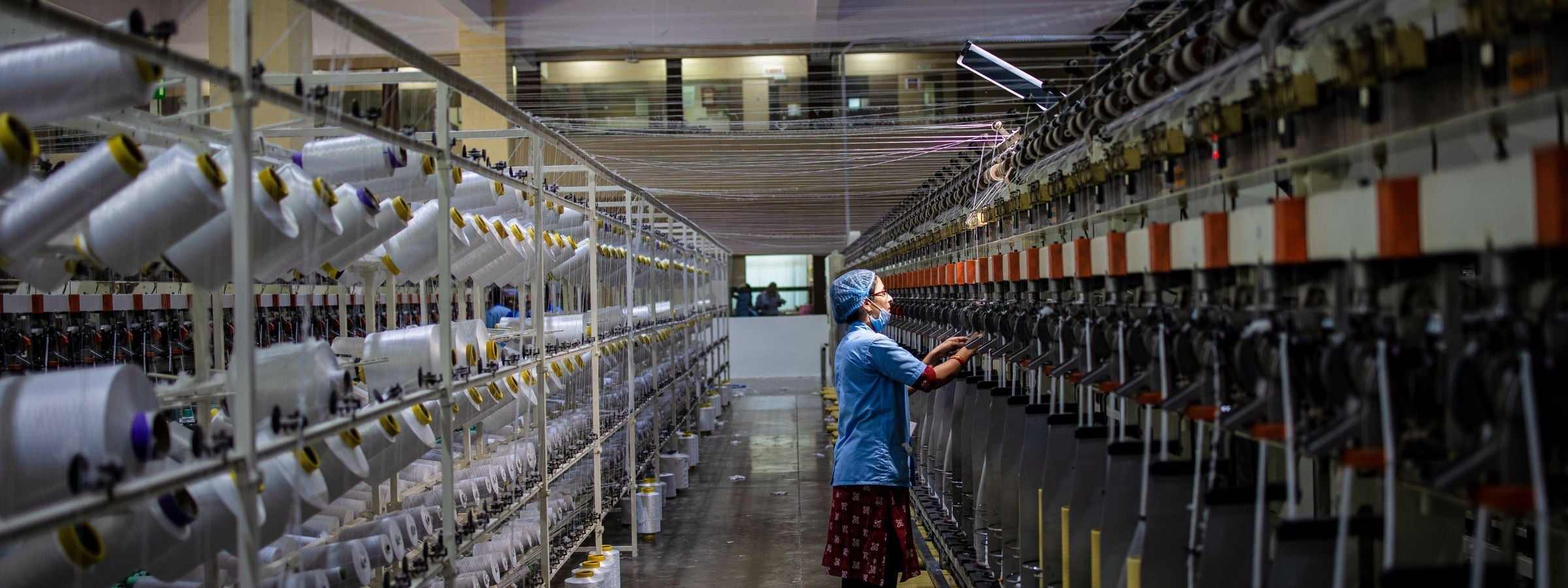
KINEX leaves no room for doubt about this: "Our socks are produced in Portugal and the pressure profile is checked with measurement technology from Swisslastic. Such equipment is also used within the world of medical compression textiles. During such a measurement, it is examined how much pressure the sock exerts at different points. So it's not just about the pressure around the ankle, but also about how that pressure decreases towards the calf."
Why this difference is central for KINEX: "With many products, the word compression is on the packaging because the sock feels tight. We want to be able to check whether the profile actually matches what we have designed. Measuring is knowing, even outside the gym."
The conclusion
A good compression sock is a measured technical product, not a collection of slogans. The strongest quality guarantee is not that it is made on a medical machine, but that the entire pressure profile is checked according to a fixed protocol and remains within tolerances. If you want to know what the numbers mean, read what mmHg means. And why the distribution weighs more than the highest number is in why pressure distribution is more important than the highest pressure.
Perseverance pays off. Measuring is knowing.
Sources
Lurie & Kistner (2014), Phlebology · Partsch et al. (2006), Journal of Vascular Surgery · Kokai et al. (2021), Phlebology · Brophy-Williams et al. (2015), Journal of Sports Sciences