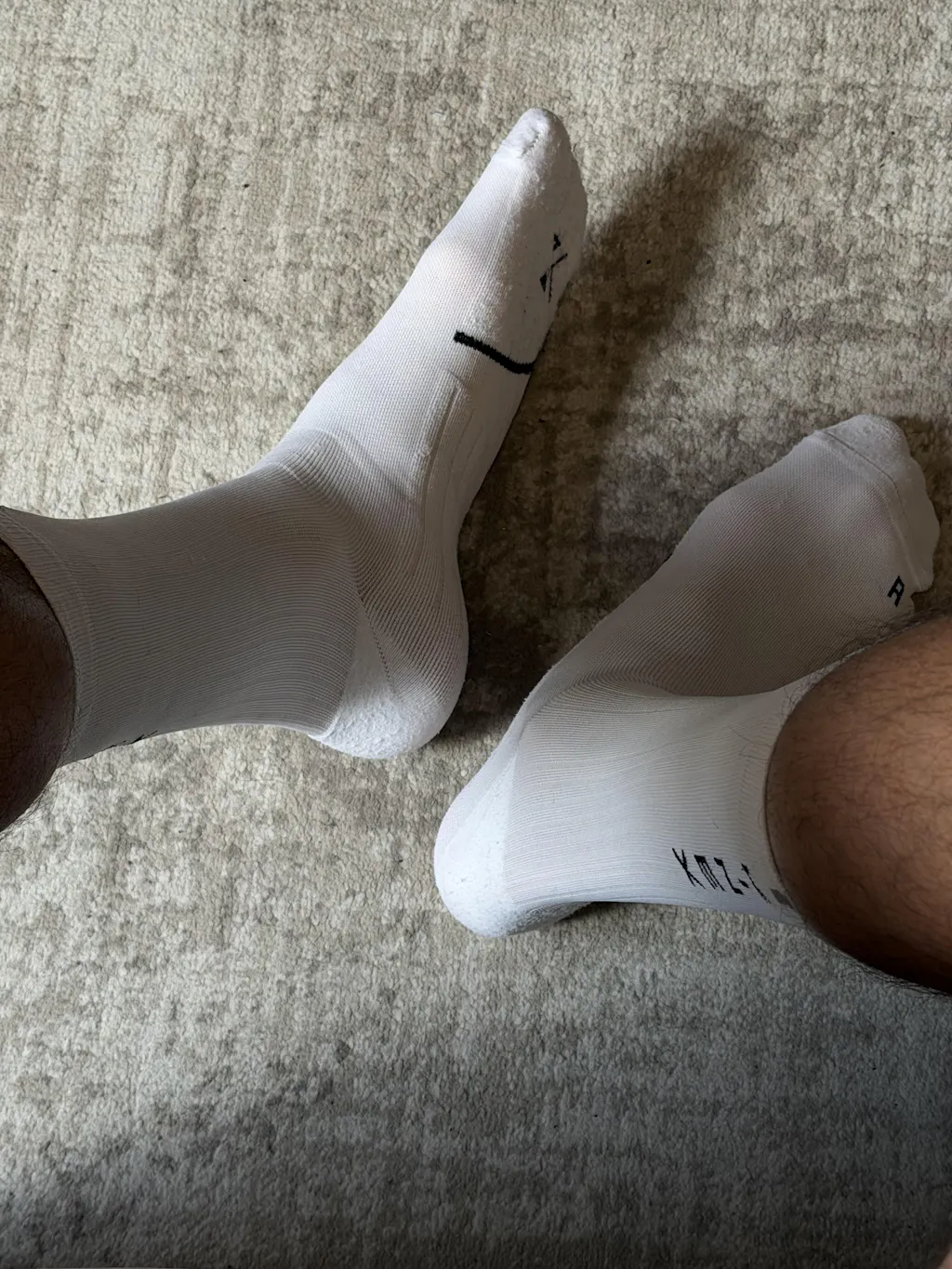


What Do Compression Socks Do? How They Work, Benefits, and Disadvantages Explained
Compression socks apply targeted pressure to the lower leg, with the highest pressure at the ankle and gradually decreasing towards the calf. This gradual pressure distribution supports blood circulation, can reduce muscle vibrations, and helps your legs feel more comfortable during sports, recovery, or long days of standing or sitting.
What are compression socks?
Compression socks are specially designed socks that apply controlled pressure to the lower leg. Unlike regular sports socks, they have a measurable compression value, expressed in mmHg.
This pressure supports the return flow of blood to the heart and can contribute to a more stable feeling in the lower legs during exertion.
View the full range of KINEX compression socks here.
How do compression socks work?
Compression socks work with graduated compression. This means:
- Highest pressure at the ankle
- Gradually decreasing pressure towards the calf
- Support for blood circulation
- Less muscle vibration on impact
The compression value is measured in mmHg. The higher the number, the firmer the pressure.
What does mmHg mean?
mmHg stands for millimeters of mercury pressure. It indicates how much pressure the sock applies to the leg.
Many sports compressions fall within:
- Class 1: light compression
- Class 2: 23–32 mmHg
Also read about the difference between Class 1 and Class 2 compression socks for a targeted comparison.
What are compression socks good for?
1. Running and endurance sports
Over longer distances, many athletes experience more stability in their lower legs. Compression can help limit muscle vibrations and reduce fatigue.
For intensive training, many athletes choose knee-high Class II compression socks (23–32 mmHg).
2. Recovery after exertion
After a strenuous workout, compression can contribute to a comfortable recovery feeling. Many athletes wear their socks for 1 to 4 hours after exertion.
Read here how long you can safely wear compression socks.
3. Daily use
Compression socks can also be pleasant outside of sports. Think of long working days, travel, or prolonged standing.
For daily comfort, many people choose low compression socks.
Do compression socks really help?
Compression socks are not a miracle cure. They won't automatically make you faster and don't replace training.
What they can do:
- Support blood circulation
- Reduce muscle vibrations
- Provide a more stable feeling during exertion
- Contribute to recovery comfort
The effect heavily depends on:
- The correct size
- The correct compression class
- Consistent pressure distribution
How do you choose the right compression socks?
1. Determine your goal
- Intensive sport → firmer compression
- Daily use → lighter compression
- Recovery → targeted support
2. Choose the correct compression class
Are you unsure? Then check the overview of compression classes.
3. Measure your calf circumference
The correct size is more important than shoe size. Compression must match calf and ankle circumference to be effective.
Also read what to look for when choosing compression socks.
How long can you wear compression socks?
During sports, you usually wear them for as long as you are active. After sports, often for several hours. For daily use, this can be longer, as long as the sock is comfortable.
Read the full overview in how long you can wear compression socks.
Who should not wear compression socks?
Most healthy athletes can safely wear compression socks. For serious vascular problems or medical conditions, it is wise to seek medical advice first.
Read more in who should not wear compression socks.
Are compression socks worth it?
For athletes who train seriously or run long distances, compression socks can be a valuable addition. The combination of reliable pressure distribution, correct size, and durable elasticity makes the difference.
View the full range here: View all KINEX compression socks
Frequently asked questions
What exactly do compression socks do?
They apply gradual pressure to the lower leg to support blood circulation and reduce muscle vibrations.
What is the difference between Class 1 and Class 2?
Class 1 provides light compression. Class 2 provides firmer compression between 23 and 32 mmHg.
Are compression socks suitable for daily use?
Yes, provided the compression suits your situation and the size is correct.

Written by Justin Wiggers